
Real Madrid FC: The Greatest Club in Football History
SPORTFEATURED

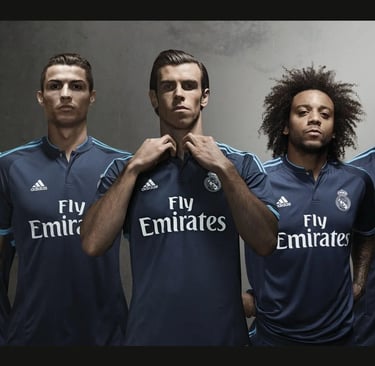
Real Madrid Club de Fútbol stands as one of the most prestigious and successful football clubs in the world. With a legendary history spanning over 120 years, numerous championship titles, and a roster of some of football's greatest players, Los Blancos have established themselves as an institution in world sport. This comprehensive guide explores the club's rich heritage, achievements, current operations, and status as a global powerhouse.
The Foundation and Early Years
Real Madrid was officially founded on March 6, 1902, initially operating as Madrid Football Club. The club's early years were marked by competitive success in Spanish football, particularly in the Copa del Rey, where they won their first title in 1905 and continued their dominance with four consecutive victories from 1905 to 1908. In 1920, King Alfonso XIII granted the club the prestigious title of "Real," meaning "Royal" in Spanish, along with the royal crown emblem, transforming Madrid Football Club into Real Madrid Club de Fútbol.
The team's home stadium evolved over time, with the club moving between various grounds before relocating to the iconic Santiago Bernabéu in 1947. The stadium has since become one of the world's most renowned football venues, serving as the fortress of Los Blancos for over seven decades.
Record-Breaking Trophy Cabinet
Real Madrid's dominance across multiple competitions is unparalleled in football history. The club has accumulated an extraordinary collection of domestic and international titles. In La Liga, Spain's top division, Madrid holds the record with 36 championship titles. In the UEFA Champions League, the club's most prestigious achievement, they have won 15 European Cups—a record that stands unmatched in the competition's history.
Beyond these flagship competitions, Real Madrid has won the Copa del Rey on 20 occasions, the Supercopa de España 13 times, and claimed the FIFA Club World Cup five times. The club has also conquered the UEFA Europa League twice and won the European/UEFA Super Cup a record six times.
The Era of Carlo Ancelotti
Between 2021 and 2025, Italian manager Carlo Ancelotti led Real Madrid through one of the club's most successful periods. Under his management across two separate stints, Ancelotti achieved historic success, winning 15 trophies—making him the most decorated manager in the club's 123-year history. His achievements included three UEFA Champions League titles, three Club World Cups, two La Liga championships, and two Copas del Rey, among others.
The 2023-24 season represented a particular high point, as Madrid completed a treble of major honours. The club won their 15th European Cup (La Decimoquinta), capturing their record-extending 36th La Liga title with four games remaining, and secured their 13th Spanish Super Cup. Ancelotti's tactical acumen and leadership guided Madrid through challenging knockout stages, including memorable victories over Manchester City and Bayern Munich on the path to Champions League glory.
During the 2024-25 season, Ancelotti's final campaign yielded two additional trophies: the UEFA Super Cup (defeating Atalanta 2-0) and the FIFA Intercontinental Cup (beating Pachuca 3-0), raising his total to an unprecedented 15 trophies and establishing a new club record for managerial success.
The Dawn of the Xabi Alonso Era
Effective June 1, 2025, legendary former midfielder Xabi Alonso took the helm as Real Madrid's new head coach on a three-year contract running through June 30, 2028. Alonso, who represented Real Madrid 236 times as a player between 2009 and 2014, winning six titles during that period, returns to the club as one of football's most accomplished managers.
Alonso's appointment came after a historic tenure at Bayer Leverkusen, where he made history by winning the German Bundesliga, DFB-Pokal, and German Super Cup during his time at the club. His return to the Santiago Bernabéu represents an exciting new chapter for the club, combining his deep understanding of Real Madrid's traditions with his demonstrated success at the highest levels of European football.
The Santiago Bernabéu: A Temple of Football
The Santiago Bernabéu Stadium stands as the spiritual home of Real Madrid and one of the world's most iconic football venues. Originally inaugurated on December 14, 1947, with Real Madrid defeating Portuguese side Os Belenenses 3-1, the stadium has undergone multiple expansions and renovations to maintain its status as a world-class facility.
Following extensive renovations completed in late 2024, the stadium now features a retractable roof and maintains a seating capacity of 83,186, making it the second-largest stadium in Spain. The venue has hosted four European Cup finals and has been the backdrop for countless historic moments in football. The stadium's transformation over the decades reflects Real Madrid's commitment to excellence and innovation, ensuring the club remains at the forefront of modern football infrastructure.
Current Squad and Star Power
The 2025-26 Real Madrid squad represents one of the most star-studded lineups in world football. The club made headlines with the free transfer signing of French superstar Kylian Mbappé in summer 2024, one of the most significant transfers in recent memory. Mbappé, who leads the squad with an annual salary of €31.25 million, brings elite finishing and attacking prowess to Los Blancos.
Alongside Mbappé, Brazilian winger Vinícius Júnior has established himself as a cornerstone of Madrid's attacking lineup, while English midfielder Jude Bellingham, acquired for a fee of €141.87 million, provides midfield dynamism and box-to-box excellence. The defensive lineup features Belgian goalkeeper Thibaut Courtois, German defender Antonio Rüdiger, Brazilian defender Éder Militão, and English fullback Trent Alexander-Arnold, who joined the club to add defensive stability.
The midfield depth includes Uruguayan Federico Valverde, French midfielder Aurélien Tchouaméni, and promising young talent Arda Güler. Additional attacking options include Rodrygo and young Brazilian prospect Endrick, providing versatility and depth throughout the squad.
The El Clásico Rivalry
Real Madrid's rivalry with Barcelona, known as El Clásico, extends far beyond sporting competition. The fixture represents one of football's fiercest and most politically charged rivalries, with roots tracing back to the Spanish Civil War era. Barcelona emerged as a symbol of Catalan nationalism, while Real Madrid represented Spanish centralism, a distinction that intensified the rivalry during Francisco Franco's dictatorship.
The modern El Clásico rivalry reached its zenith during the era of Cristiano Ronaldo and Lionel Messi, two of football's greatest players, who elevated every encounter between the clubs to a global spectacle. In recent matches, Real Madrid has shown dominance, including a commanding 2-1 victory in October 2025 at the Santiago Bernabéu, where Jude Bellingham scored the decisive goal to end Barcelona's four-game winning streak in the fixture.
The Greatest Players in Club History
Real Madrid's legacy has been shaped by extraordinary individual talents who defined eras and set records that have proved difficult to surpass. Cristiano Ronaldo stands as the club's greatest player of all time, having scored an astounding 451 goals in 438 appearances during his nine-year stint with the club. Ronaldo's combination of physical prowess, technical excellence, and relentless winning mentality delivered four Ballon d'Or awards and four Champions League titles.
Alfredo Di Stéfano, the Argentine maestro who graced the club during the 1950s and early 1960s, scored 308 goals and was instrumental in Madrid's five consecutive European Cup victories, establishing the club's tradition of continental dominance. Zinedine Zidane, the French artist who starred for Madrid before becoming their most successful manager in the modern era, etched his name into legend with his iconic volley in the 2001 Champions League final. Other club legends include Karim Benzema, the club's second all-time leading goalscorer with 354 goals, Luka Modrić, Toni Kroos, and Sergio Ramos.
Financial and Operational Scale
Real Madrid operates at a scale befitting its status as the world's most successful club. The club's current wage bill stands at approximately €284.3 million for the 2025-26 season, representing the highest payroll not only in La Liga but across all of European football. The club maintains a healthy revenue-to-wages ratio and operates comfortably within La Liga's financial fair-play regulations, with a salary cap allowance of €754.8 million for the 2025-26 season.
The squad's average annual salary approximates €11.8 million per player, reflecting the premium talent throughout the roster. This significant financial investment demonstrates the club's unwavering commitment to assembling world-class talent and competing at the highest levels across multiple competitions simultaneously.
Tactical Identity and Playing Philosophy
Under Xabi Alonso's management, Real Madrid has adopted a flexible tactical approach that emphasizes midfield density and defensive organization. In the 2025 El Clásico, the club lined up in a 4-3-3 formation that compacted into a 4-4-2 shape out of possession, prioritizing the disruption of Barcelona's buildup play through aggressive pressing and a robust central midfield block.
Traditionally, Real Madrid have been characterized as a possession-oriented team that plays out from the back, combining patient buildup with incisive long-range passes and switches of play to exploit space in wide areas. The club's attacking philosophy emphasizes creating overloads in key areas, with forwards pressing high to trigger immediate transitions when possession is lost.
Recent Performance and Future Outlook
The 2024-25 season presented challenges for Real Madrid, marking the end of Ancelotti's tenure. Despite early success in cup competitions, the campaign witnessed defensive vulnerabilities and inconsistency, with Madrid conceding 84 goals across all competitions—matching their worst defensive record from 1998-99. However, the club finished atop La Liga with 31 points from their first 12 matches, demonstrating resilience despite these difficulties.
Xabi Alonso's appointment signals the beginning of a new chapter. His success at Bayer Leverkusen, where he broke Bayern Munich's domestic hegemony, suggests he possesses the tactical innovation and leadership qualities required to elevate Real Madrid to new heights. The combination of elite attacking talent in Mbappé, Bellingham, and Vinícius Júnior, coupled with experienced defensive reinforcements, provides Alonso with a comprehensive squad capable of competing for multiple trophies.
Conclusion
Real Madrid FC represents far more than a football club—it is a global institution synonymous with excellence, tradition, and winning. From its modest beginnings in 1902 to its current status as the most decorated club in football history, Real Madrid has consistently attracted the world's elite talent and demonstrated an unwavering commitment to competitive success. With 15 European Cups, 36 La Liga titles, and countless other honors, the club's trophy cabinet stands unmatched. As Xabi Alonso embarks on his journey as head coach, the next chapter of this legendary club promises to deliver continued excellence and additional chapters to an already extraordinary history.