
The Ultimate Guide to American Football: Rules, History, and the Game's Best Players
SPORTFEATURED
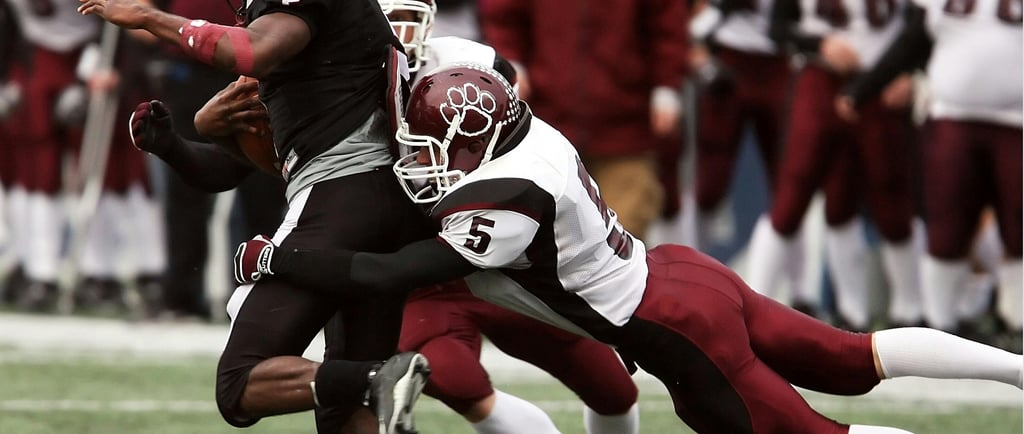
American football stands as one of the most popular and widely watched sports in the United States, captivating millions of fans each season with its combination of strategy, athleticism, and intensity. Whether you're a casual viewer or aspiring to understand the finer points of the game, this comprehensive guide covers everything you need to know about American football.
The Rich History of American Football
The origins of American football trace back to 19th-century Europe, drawing inspiration from both soccer and rugby, two sports that were hugely popular in England. The transformation began with what many historians consider the first American football game, played on November 6, 1869, between Rutgers University and Princeton University at New Brunswick, New Jersey. In this early match, two teams of 25 players used a round ball that resembled soccer, and the objective was to advance the ball into the opponent's goal.
However, the game that truly defined American football emerged during the 1880s through the groundbreaking work of Walter Camp, commonly known as the "Father of American Football". Camp, a legendary rugby player from Yale, revolutionized the sport by introducing fundamental rule changes that transformed it from its rugby roots into a distinct American game. His innovations included establishing the line of scrimmage, introducing the concept of downs (allowing teams four attempts to advance the ball 10 yards), and reducing teams from 15 players to 11 players per side. These changes established the framework that remains central to the sport today.
Understanding the Basic Rules
The foundation of American football rests on the down system. When a team gains possession of the ball, they receive four chances, called "downs," to advance the ball at least 10 yards from the line of scrimmage. If the offensive team successfully moves the ball 10 yards or more, they earn a "first down," and the down counter resets to give them another four opportunities to advance another 10 yards. This process continues until either the offense scores or fails to advance 10 yards within their four downs, at which point the defense gains possession of the ball.
Scoring in American football involves multiple methods. A touchdown, worth 6 points, occurs when a team advances the ball into the opponent's end zone. After scoring a touchdown, the offense receives an additional untimed opportunity to score extra points. Teams can attempt an extra point kick from designated distances for 1 point, or attempt a "two-point conversion" by advancing the ball into the end zone again for 2 points. Additionally, teams can score a field goal, worth 3 points, by kicking the ball through the opponent's goalposts. The defense can also score by making an interception (catching a pass) or fumble recovery and returning it for a touchdown, or by tackling the ball carrier in their own end zone for a safety, worth 2 points.
Offensive and Defensive Positions Explained
American football features specialized positions designed for specific roles on offense and defense.
On offense, the quarterback (QB) serves as the leader, calling plays and either throwing passes or handing off the ball to running backs. The offensive line consists of five players: the center (C), who snaps the ball to the quarterback; two guards (LG/RG) positioned beside the center; and two tackles (LT/RT) on the outer edges. The running back (RB) receives handoffs to run with the ball and can also catch passes. Wide receivers (WR) use speed and quickness to elude defenders and catch passes, while the tight end (TE) functions as both a receiver and blocker.
On defense, the defensive line comprises two defensive tackles (DT) in the middle and two defensive ends (DE) on the edges. These players work to stop inside and outside running plays while pressuring the quarterback. Behind them line the linebackers (LB), who serve as the defense's best tacklers and must defend both the run and pass. The secondary consists of cornerbacks (CB), who cover wide receivers and defend passes, and safeties, who serve as the last line of defense.
The Modern NFL and the 2025 Season
The National Football League (NFL) represents the pinnacle of professional American football. The 2025 NFL season is the 106th season of the league, beginning on September 4, 2025, with the Philadelphia Eagles defeating the Dallas Cowboys in the traditional NFL Kickoff Game. The season follows an 18-week schedule, with each of the league's 32 teams playing 17 games plus one bye week.
Notable features of the 2025 season include special games scheduled for major holidays. Three Thanksgiving Day games are planned for November 27, including the traditional matchup between the Green Bay Packers and Detroit Lions. For the first time in recent years, Christmas falls on a Thursday, leading to unprecedented Thursday Christmas games across multiple time slots.
The 2025 season introduced several rule changes aimed at improving gameplay. Notably, teams can now declare an onside kick at any point in a game when trailing (previously limited to the fourth quarter), and can line up closer to the opponent's goal line. The overtime rules were also refined, ensuring both teams receive the opportunity to possess the ball, with regular season overtime limited to 10 minutes.
The Game's Elite Players
The 2025 NFL season showcases some of the most talented players in league history.
Lamar Jackson, quarterback for the Baltimore Ravens, ranks as the top-rated quarterback in the league. In 2024, Jackson posted career-best passing statistics while also leading all quarterbacks in rushing yards, becoming the first player to throw for 4,000-plus yards and rush for 800-plus yards in the same season. He set multiple remarkable records, including being the only quarterback to throw for 40-plus touchdowns with fewer than five interceptions.
Josh Allen, quarterback for the Buffalo Bills and the defending NFL MVP, ranks as one of the league's elite performers. Allen possesses the strongest arm in the league and is regarded as potentially the most improved prospect in NFL history. In 2024, he compiled 41 total touchdowns across passing, rushing, and receiving, becoming the only player in NFL history to accomplish this feat in a single season.
Patrick Mahomes, quarterback for the Kansas City Chiefs, led his team to a 15-1 record and a third straight Super Bowl appearance. Known for his incredible field awareness and ability to deliver crucial fourth-quarter plays, Mahomes led the league in fourth-quarter comebacks and game-winning drives in 2024.
Saquon Barkley, running back for the Philadelphia Eagles, became the No. 1-ranked player in the Top 100 Players of 2025 following his breakout debut season with the team. In his first season with Philadelphia, Barkley rushed for over 2,000 yards, earned AP 2024 Offensive Player of the Year, and was instrumental in the Eagles' championship run, winning Super Bowl LIX. Barkley accomplished this feat just the second time a running back has topped the Top 100 rankings in its 15-year history.
Myles Garrett, defensive end for the Cleveland Browns, stands as the league's top-rated defender for the second consecutive year. In 2024, Garrett achieved his seventh consecutive season with 10 or more sacks and surpassed the 100-sack milestone, becoming the first player in NFL history to reach the mark before his 29th birthday. With a league-leading 22 tackles for loss, Garrett demonstrated his dominance beyond pass-rushing.
Justin Jefferson, wide receiver for the Minnesota Vikings, made a strong comeback to elite status in 2024, recording a career-long 97-yard touchdown and demonstrating elite route-running and ball-catching ability.
Why American Football Captivates Millions
American football combines elements of chess-like strategy with explosive athletic performance. Every play involves carefully orchestrated movements from eleven players working in coordinated formation, while defenders must react instantaneously to disrupting offensive schemes. The sport's structure—where teams alternate possession and must strategically manage limited opportunities—creates high-stakes drama on every play.
The NFL's nationwide presence, with teams representing cities across the country, fosters intense regional loyalty and fierce rivalries. The sport's major events, particularly the Super Bowl, have evolved into cultural phenomena watched by millions worldwide, attracting not only football fans but also casual viewers drawn by entertainment, commercials, and halftime performances.
Conclusion
American football has evolved from humble 19th-century college origins into a sophisticated multi-billion-dollar enterprise that commands attention across the nation. Understanding the game's rules, positions, and elite athletes enhances enjoyment whether watching professionally or recreationally. The combination of strategic complexity, athletic excellence, and competitive intensity ensures that American football will continue captivating audiences for generations to come.