
Understanding NASA: Missions, Achievements, and the Future of Space Exploration
INNOVATIONFEATUREDTECHNOLOGY
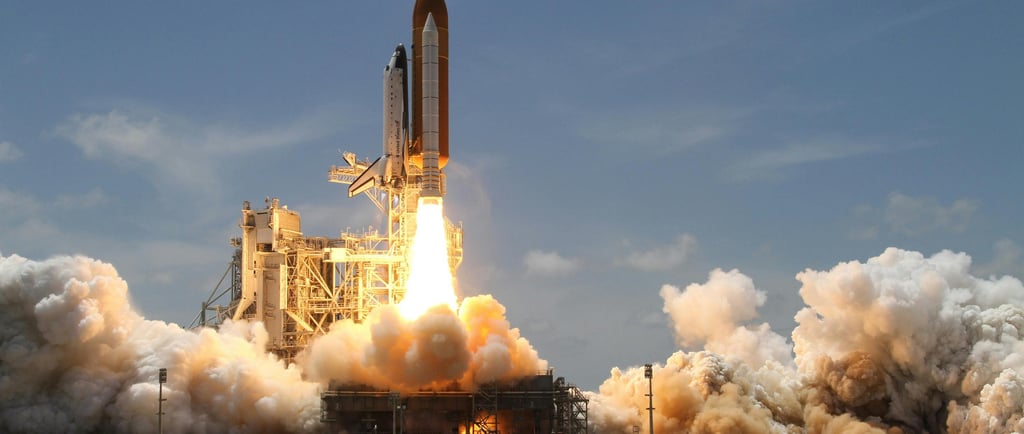
The National Aeronautics and Space Administration (NASA) stands as one of humanity's most transformative institutions, shaping our understanding of space, advancing technological innovation, and inspiring generations to reach for the stars. Since its inception on October 1, 1958, NASA has achieved remarkable milestones that have fundamentally changed how we perceive our place in the universe.
The History and Mission of NASA
NASA was established in response to the Soviet Union's launch of Sputnik, representing America's commitment to space exploration and technological leadership. From its inception, the agency set ambitious goals: expanding human knowledge of space, leading the world in space-related technological innovation, developing vehicles that can carry both equipment and living organisms into space, and coordinating with international space agencies to achieve scientific advancements. Over the past six decades, NASA has achieved every one of these goals and continues to pursue some of science's biggest mysteries.
Landmark Achievements That Changed History
NASA's history is punctuated with achievements that have captured human imagination and advanced scientific knowledge. The early years saw pioneering successes: Explorer 1's 1958 launch discovered Earth's radiation belts, while the Mercury program established the feasibility of human spaceflight with Alan Shepard's 1961 flight. The agency then set its sights on the Moon with the Gemini program, culminating in the historic Apollo 11 mission in 1969 when Neil Armstrong became the first human to walk on the Moon.
Beyond human spaceflight, NASA's robotic missions have revolutionized planetary science. The Voyager probes, launched in 1977, continue operating in interstellar space, making them the most distant human-made objects. The Hubble Space Telescope, launched in 1990, has captured over 1.5 million astronomical observations of more than 40,000 objects in space, fundamentally changing our understanding of the universe's age, size, and composition. The Mars Perseverance rover, which landed in Jezero Crater in 2021, continues exploring the Red Planet searching for signs of ancient microbial life and has collected 24 rock and regolith samples.
Current Missions and Recent Developments
Mars Exploration
The Perseverance rover represents the cutting edge of Mars exploration. As of October 2025, it has been active on Mars for 1,642 sols (Martian days) and has driven over 30 kilometers across the Martian surface. In its Northern Rim campaign, Perseverance is exploring rocks ejected from deep within Mars that were thrown upward when the impact created Jezero Crater 3.9 billion years ago. The rover's sample collection efforts are crucial to the future Mars Sample Return mission, with 33 out of 43 sample tubes filled as of July 2025.
A significant moment came with the conclusion of the Ingenuity helicopter mission in January 2024, though not without legacy. Despite its damage during that final flight, Ingenuity successfully completed 72 flights, logging over 128 minutes of flight time and traveling more than 17 kilometers. Its achievements have paved the way for future aerial exploration of other planets, particularly missions to Europa and Titan.
Jupiter System Exploration
On October 14, 2024, NASA launched the Europa Clipper, the largest spacecraft ever built for interplanetary exploration. At 7,145 pounds with a solar panel wingspan exceeding 100 feet, this mission represents humanity's most ambitious effort to explore an ocean world that may harbor life. The spacecraft will travel 1.8 billion miles (2.9 billion kilometers) over approximately six years, arriving at Jupiter in April 2030.
Once at Jupiter, Europa Clipper will conduct 49 close flybys of Europa, descending to within 25 kilometers of the moon's surface. The spacecraft carries nine specialized science instruments designed to study Europa's ice shell, explore the subsurface ocean that may contain more water than all of Earth's oceans combined, and search for signs of habitability. Scientists believe Europa's hidden ocean could potentially host life, making this one of humanity's most profound scientific quests.
Recent Space Weather Missions
NASA's commitment to understanding our Sun and its effects on Earth continues with new missions. TRACERS, launched July 23, 2025, studies magnetic reconnection—when solar activity disrupts Earth's magnetic field—to help scientists better understand and prepare for space weather effects. IMAP, launched September 24, 2025, will help researchers understand the boundary of the heliosphere, the massive bubble created by the Sun surrounding our solar system.
The Artemis Program: Returning Humans to the Moon
Among NASA's most ambitious current initiatives is the Artemis program, which aims to land the first woman and first person of color on the Moon. The program represents a fundamental shift from the Apollo era's single-vehicle approach, instead utilizing multiple vehicles from NASA and private companies like SpaceX and Blue Origin.
Artemis II, expected to launch no earlier than September 2025, will send a crew of four astronauts on a 10-day mission looping within 4,600 miles of the Moon. The crew consists of Commander Reid Wiseman, Pilot Victor Glover, mission specialists Christina Koch, and Canadian astronaut Jeremy Hansen.
Artemis III, currently targeted for late 2027 or early 2028, will achieve the first crewed lunar landing since Apollo 17 in 1972. Two of four crew members will descend to the Moon's South Pole using SpaceX's Starship Human Landing System, marking humanity's return to the lunar surface after a 55-year absence. The mission will conduct up to four moonwalks over a 6.5-day stay, with astronauts performing scientific investigations and sample collection.
The vision extends beyond individual lunar landings. Artemis IV (targeting mid-2027) and Artemis V (March 2030) will continue lunar exploration while establishing the Lunar Gateway—a space station in lunar orbit that will serve as a refueling hub and waypoint for deep space missions. These missions will also introduce the Lunar Terrain Vehicle, the first crewed lunar rover since Apollo 17, allowing astronauts to explore larger regions of the lunar surface.
NASA's Innovation and Technological Spinoffs
Beyond space exploration, NASA has generated innovations that have profoundly affected daily life on Earth. The agency's inventions have earned recognition as among TIME's Inventions of 2024, including the Advanced Composite Solar Sail System, which tests technologies allowing spacecraft to "sail on sunlight."
NASA's technological contributions extend far beyond space. CMOS image sensors, invented by JPL scientist Eric Fossum to miniaturize cameras for interplanetary missions, have become the agency's most ubiquitous spinoff technology, enabling digital cameras in mobile phones. NASA's development of correction software for GPS signal errors in the 1990s led to self-driving farm equipment, with nearly 70% of North American farmland now cultivated using technology derived from NASA research.
Other significant spinoffs include the DustBuster cordless vacuum cleaner, developed from technology created for lunar exploration, scratch-resistant lenses used in sunglasses, invisible braces made from transparent ceramics, and aircraft anti-icing systems. Memory foam, freeze-dried food, and advanced firefighting equipment represent just a fraction of NASA's contributions to consumer products and industrial applications.
Earth Observation and Climate Science
NASA's Earth Science missions play a crucial role in understanding our planet's climate and natural resources. The agency operates over 80 currently active science missions monitoring Earth's systems. Satellites like Aqua, Aura, and the Global Precipitation Measurement Core Observatory provide essential data on weather patterns, atmospheric composition, and climate trends.
Recent additions to Earth observation capabilities include NASA's PACE (Plankton, Aerosol, Cloud, Ocean Ecosystem) mission launched in 2024, and next-generation satellites that deliver precise data about freshwater supplies, agricultural conditions, and rare Earth minerals critical for technology manufacturing. Tomorrow.io is leveraging breakthrough miniaturized radar technology first proven by NASA's RainCube satellite to observe major storms more effectively.
International Collaboration and Partnerships
NASA's work increasingly emphasizes international cooperation. The International Space Station, launched in 1998, represents one of humanity's most ambitious international collaborations, involving the United States, Russia, Canada, Japan, and the participating countries of the European Space Agency. The ISS has hosted astronauts from 18 countries and continues to grow.
Current partnerships extend to joint missions like the NISAR (NASA-ISRO Synthetic Aperture Radar) Earth-observing satellite developed with the Indian Space Research Organisation, demonstrating how international cooperation accelerates scientific discovery. The Artemis program itself involves international partners contributing expertise and hardware to lunar exploration efforts.
Looking Toward the Future
The future of NASA reflects both continuity and transformation. The agency continues expanding robotic exploration to distant worlds, with missions to Venus through the DAVINCI mission (expected 2029) and Saturn's moon Titan through the Dragonfly mission (launching 2027). The Moon to Mars architecture represents a comprehensive vision for sustained human presence beyond Earth, potentially leading to human missions to Mars within the coming decades.
Recent developments suggest significant strategic changes ahead. A 62-page document outlining proposed reforms, often referenced as "Project Athena," suggests potential restructuring of NASA centers to focus on nuclear electric propulsion, establishing new Mars exploration programs, and adopting an "accelerate/fix/delete" philosophy for mission evaluation. While parts of this plan remain under discussion, it reflects the evolving nature of space exploration priorities.
Conclusion
From its establishment in 1958 to its cutting-edge missions in 2025, NASA has consistently pushed the boundaries of human knowledge and capability. Whether landing rovers on Mars, launching spacecraft to explore Jupiter's ocean worlds, preparing astronauts to return to the Moon, or developing technologies that improve life on Earth, NASA embodies humanity's enduring drive to explore, discover, and innovate. As the agency looks toward returning humans to the Moon and eventually Mars, it continues fulfilling its original mission: to expand human knowledge of space and lead the world in space-related technological advancement for the benefit of all.