
Understanding the iPhone 17 Generation: Positioning, Performance, and Consumer Market Response.
EDUCATIONFEATUREDTECHNOLOGY
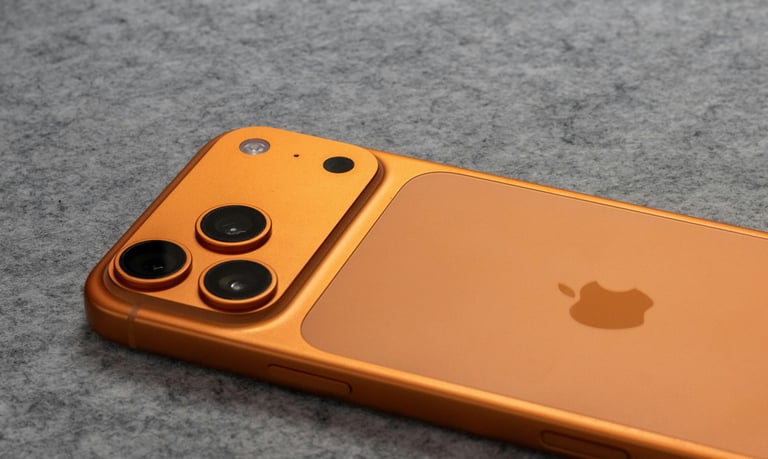
The iPhone 17 series represents a pivotal moment in smartphone design philosophy. This post analyzes how Apple positioned four distinct device variants across different market segments, examines the processing capabilities and AI integration shaping modern mobile devices, and reviews early market reception data revealing which products succeeded with consumers. Perfect for anyone seeking to understand contemporary smartphone technology, market strategy, or planning their next device purchase.
Apple's 2025 Technology Innovations: Redefining Performance and Intelligence
Apple's technological landscape has undergone significant transformation throughout 2025, marked by powerful processor launches, expanded artificial intelligence integration, and a refreshed smartphone ecosystem designed to meet diverse market segments. As the company prepares for its 50th anniversary milestone, understanding these developments provides insight into the current state of personal computing and mobile technology.
The New Smartphone Generation: Premium Features Across Price Points
Apple's current smartphone lineup encompasses four distinct models, each designed to address different consumer needs while maintaining the company's quality standards.
The entry-level model starts at $799 and introduces capability previously reserved for premium devices. Its 6.3-inch OLED display features 120Hz refresh rates through adaptive display technology, enabling noticeably smoother interface responsiveness during scrolling and navigation. The system achieves brightness levels reaching 3000 nits, ensuring content remains legible in direct sunlight. The optical system includes a 48-megapixel sensor paired with computational photography algorithms for enhanced image quality, particularly in low-light scenarios.
The professional-tier variants incorporate thermal management improvements utilizing internal vapor chamber technology, sustaining higher performance levels during extended use of demanding applications. Video creation capabilities include support for professional formats, allowing users to record content with expanded dynamic range and color information.
The mid-range air model represents a design-focused entry point, emphasizing thinness and weight reduction while maintaining substantial processing capability. Weighing approximately 165 grams with a 6.5-inch display, this device demonstrates that computing power and portable dimensions can coexist without fundamental compromise.
Each smartphone in the current generation benefits from the A19 processor, constructed using advanced 3-nanometer fabrication techniques. The processing architecture includes six CPU cores distributed between performance and efficiency-focused configurations, paired with a five-core graphics subsystem. Notably, each graphics core incorporates a dedicated neural processing unit, facilitating efficient operation of machine learning algorithms directly on the device. The system includes 8 to 12 gigabytes of RAM depending on model selection, and features sixteen neural processing cores specifically optimized for artificial intelligence operations.
Processing Power Redefined: The M5 Architecture
In October, Apple introduced its M5 processor, representing a fundamental evolution in silicon design philosophy centered on artificial intelligence acceleration.
Manufactured using third-generation three-nanometer technology, the M5 introduces neural processing units integrated into each graphics core, representing a departure from prior architectural approaches. These specialized circuits deliver computational capabilities exceeding four times the previous generation's peak performance for machine learning workloads when measured against comparable M4 benchmarks.
The processor architecture incorporates ten graphics cores enhanced with improved mathematical computation circuits and a third-iteration ray-tracing engine, enabling realistic three-dimensional rendering in both professional applications and consumer games. Graphics performance improvements reach approximately thirty percent over prior models, while specialized ray-tracing performance gains approach forty-five percent.
Processing core enhancements include redesigned efficiency circuits achieving approximately fifteen percent faster multithreaded computational performance compared to prior generation equivalents. The device includes sixteen specialized neural processing cores, complementing the graphics-integrated neural units for comprehensive machine learning acceleration.
Artificial Intelligence Integration Across Ecosystems
Apple's artificial intelligence initiative continues expanding throughout 2025, evolving from beta functionality to integrated system capabilities.
Language processing features now support communication across linguistic boundaries through real-time conversion between languages, functioning across messaging platforms, video calling, and traditional phone conversations. Users can experience translated communication through wireless earbuds, with processing occurring on the device rather than requiring remote computational resources, maintaining conversational privacy.
Photography enhancement systems interpret visual content through machine learning algorithms, enabling searches using natural language descriptions rather than traditional keyword matching. This capability extends to video content, permitting temporal searches that navigate users directly to relevant segments within extended recordings.
Visual analysis capabilities enable real-time interpretation of onscreen content, including establishment hours for visible retail locations, compatibility assessment for products under consideration, and language interpretation for printed text encountered in daily environments.